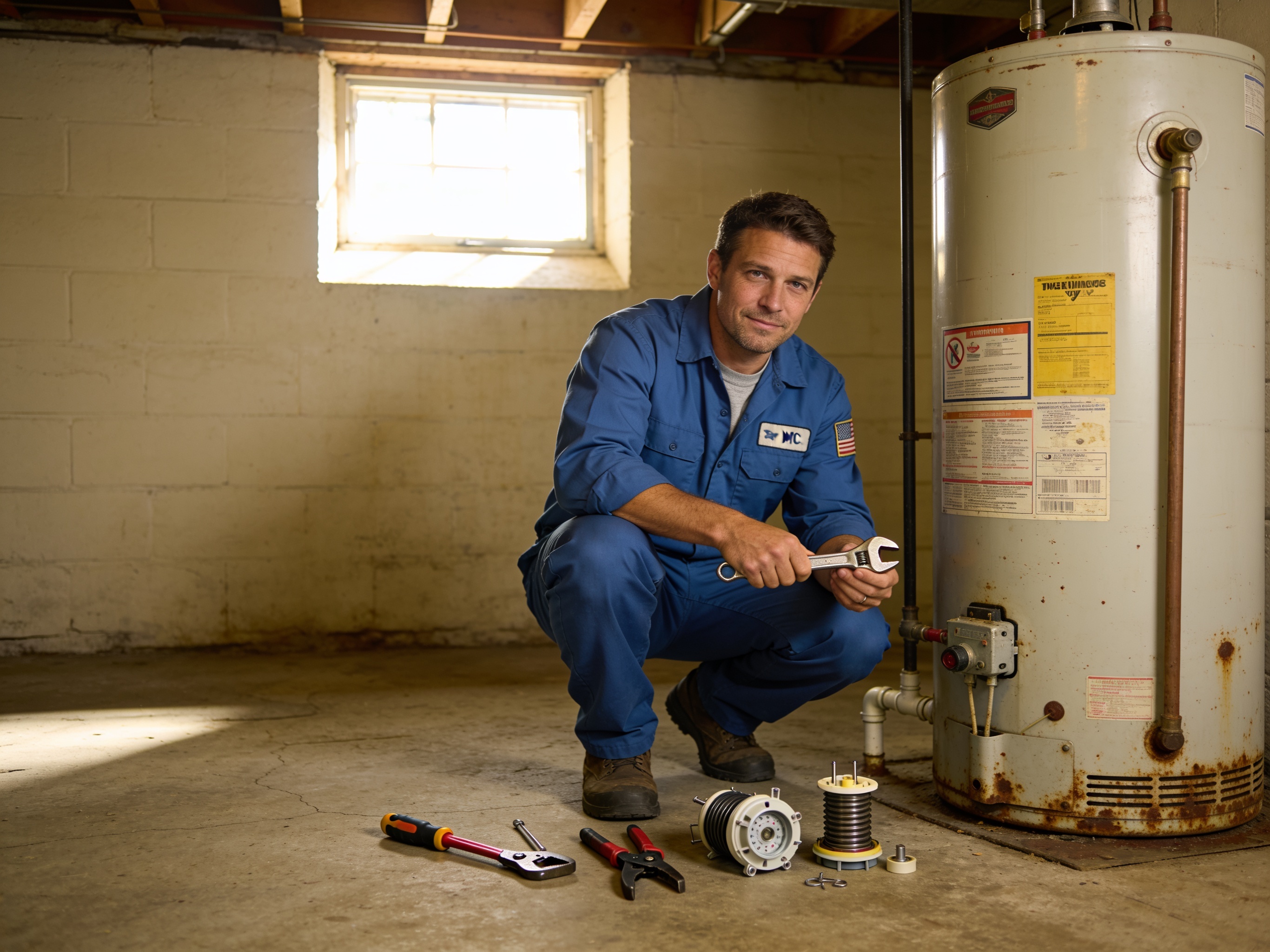
Downtown Springfield's mix of 19th-century row houses and early 20th-century commercial blocks along Main Street and near Court Square creates tight mechanical spaces that affect every plumbing and electrical call. Narrow alleys and limited rear access mean technicians often work from the street or through front entrances when replacing water heaters or running new circuits in buildings that predate modern codes.
Cold winters in Hampden County push heating systems hard in these older structures where steam and hot-water boilers are still common. Western MA Service Pros responds from Western Massachusetts with 24-hour dispatch to handle frozen supply lines, failed circulators, and electrical faults that spike when temperatures drop below freezing for days at a time.
Proximity to the Connecticut River and the rail lines at Union Station adds humidity and occasional vibration issues that accelerate corrosion on older copper and cast-iron piping in basements and crawl spaces throughout the neighborhood.
Around Downtown Springfield
We regularly work near:
- 📍Court Square
- 📍Union Station
- 📍Springfield City Hall
- 📍MassMutual Center
- 📍Symphony Hall
- 📍Connecticut River Walk
Western MA Plumbing Service in Downtown Springfield — Local Notes
- •Many Downtown Springfield buildings sit on narrow lots with shared walls, so HVAC equipment swaps require street-side crane work or disassembly through interior stairwells rather than backyard access.
- •Aging galvanized and cast-iron drain lines under Main Street addresses frequently need targeted camera inspections before any repipe because root intrusion and settling from nearby rail traffic create recurring clogs.
- •Electric panels in pre-1950 commercial spaces often lack capacity for modern mini-split or heat-pump additions, requiring coordinated upgrades that fit within the building's original service entrance limitations.
- •Winter wind exposure along the riverfront accelerates heat loss through uninsulated masonry walls, so furnace and boiler tune-ups focus on combustion efficiency to keep fuel costs manageable in these high-ceiling structures.