2026-09-25 ·
Preventing Frozen Pipes In Western Massachusetts Homes
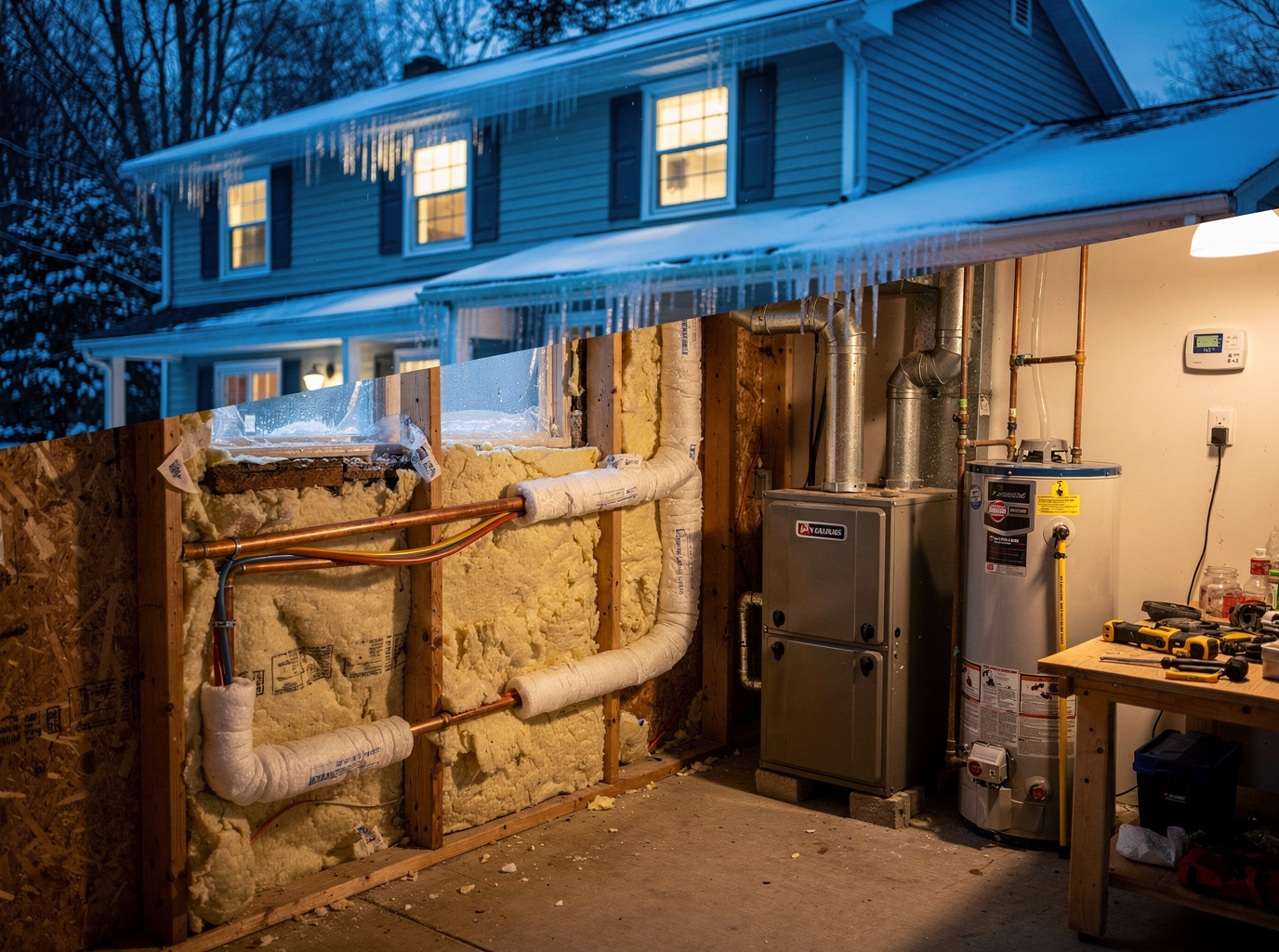
Preventing frozen pipes in Western Massachusetts homes begins with insulating supply lines in unheated basements and attics before overnight lows fall below 20°F during Hampden County winters. Older housing stock in Downtown Springfield, Forest Park, and Sixteen Acres often features exposed copper or galvanized lines running along exterior walls or through crawl spaces that lose heat quickly once the humid continental climate brings sustained freezing. Homeowners who add foam sleeves or fiberglass wrap to these runs before the first hard freeze reduce the chance of bursts that lead to water damage in finished basements common throughout the area.
Identifying Vulnerable Lines in Pre-War Springfield Houses
Many homes built before 1940 in Downtown Springfield and Forest Park have plumbing routed through uninsulated exterior walls or along the north side of the structure where wind off the Connecticut River accelerates heat loss. Check under kitchen sinks and behind washing machines for pipes that sit against brick or plaster without any protective covering. In Sixteen Acres ranch-style homes from the 1950s and 1960s, attic supply lines feeding second-floor bathrooms are another frequent failure point when attic insulation is thin. Walk the perimeter inside the home on a cold night with a flashlight to spot any lines that feel noticeably cooler than the surrounding air; those locations need immediate attention before the next temperature drop.
Insulating Pipes and Maintaining Minimum Heat
Use closed-cell foam pipe insulation with a minimum 3/8-inch wall thickness on all exposed lines in basements and crawl spaces, paying special attention to runs within 6 inches of exterior walls. In homes without central heat in the basement, keep the furnace running at a steady 55°F rather than letting the thermostat drop lower overnight. For added protection, install a small thermostatically controlled space heater in crawl spaces under Forest Park Victorians where soil moisture stays high and accelerates heat transfer away from pipes. Never rely on leaving a faucet dripping as the sole defense; consistent insulation and maintained ambient temperature provide far more reliable results across the variable winter conditions in Chicopee and West Springfield as well.
When to Schedule Professional Frozen Pipe Thawing & Prevention
If a line has already lost flow during a cold snap, shut off the main water valve and contact a technician rather than attempting to thaw with a torch or hair dryer, which can damage solder joints common in older Hampden County homes. Frozen pipe thawing & prevention crews carry specialized equipment that restores flow without risking further bursts. Homeowners who notice recurring issues in the same location often benefit from a full inspection that includes emergency leak & burst pipe repair planning. For long-term prevention, review the Spring Plumbing Inspection Checklist For Western MA to schedule insulation upgrades and heat-tape installation before the next heating season arrives.
Ongoing Maintenance for Western MA Homes
Each fall, walk through the home and verify that all exterior hose bibs have been drained and shut off at the interior valve. In areas like Sixteen Acres where additions have created long horizontal runs, consider adding a recirculating pump tied to the domestic hot water system so warm water keeps moving through vulnerable sections. Keep an eye on weather forecasts for stretches below 15°F and open cabinet doors under sinks to allow household heat to reach pipes. These small steps, repeated annually, have kept many Springfield properties from experiencing mid-winter plumbing failures even during the coldest recorded Hampden County nights.